
Casino bonus value is the amount an offer is worth on average once you count the cost of meeting its terms. It is rarely the headline figure. To find it, you need the wagering requirement, the house edge and the game rules.
First, though, it helps to see why casino games work so differently from sports betting.
The short version
- Casino games have a fixed house edge, so there are no value bets at the tables.
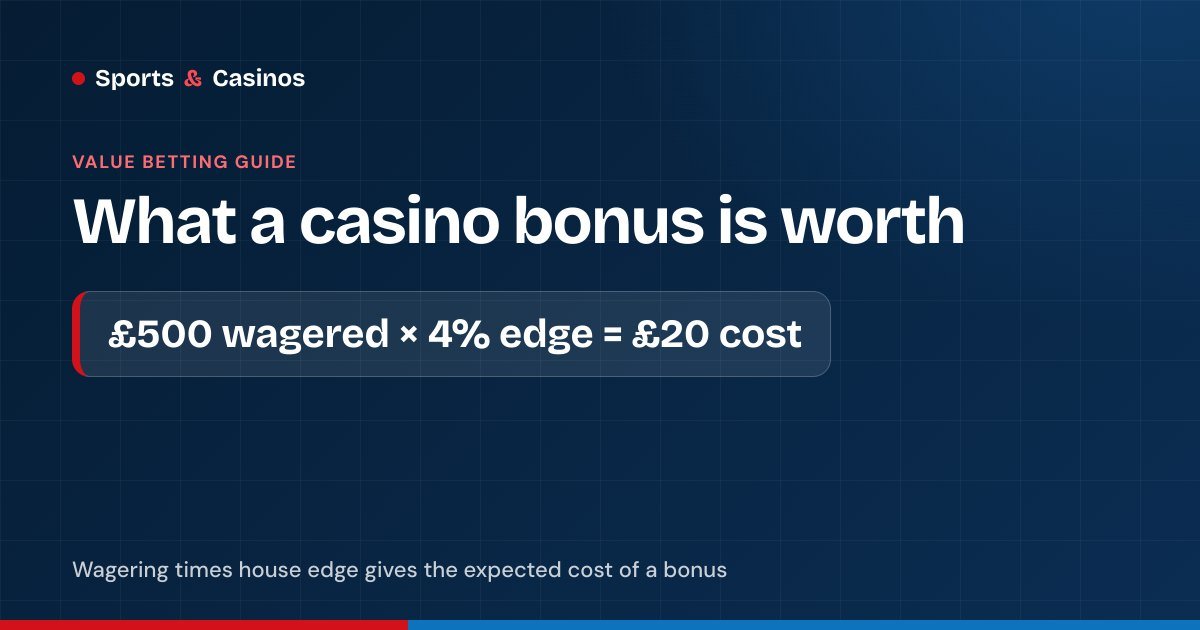
- The expected cost of a bonus is roughly the amount you must wager × the house edge.
- Game weighting can multiply that cost many times over.
- Max bet and other rules can void a bonus if you break them.
- A positive figure is an average, not a promise.
Why there is no value betting at the casino
In sports betting, odds are opinions. A bookmaker can misjudge a match, so a price can be bigger than the true chance. That gap is what value betting looks for.
Casino games are different, because the rules fix both the chances and the payouts. Take European roulette. There are 37 numbers, but a single number pays 35/1. So over 37 spins at £1 a time, you get back £36 on average for the £37 you staked. That means the house keeps about 2.70% of each stake on average. No research can change that number.
The same logic applies to slots, where the return to player (RTP) is set in the game. For example, a slot with 96% RTP has a 4% house edge over the long run. Blackjack is the main game where your choices matter. Even so, perfect basic strategy only cuts the edge, and it typically stays at around 0.5% or more, depending on the rules. You can check the right play for any hand with our blackjack strategy calculator.
Our guide to bookmaker margin vs house edge compares the two in more detail. If you are new to casino games, start with online casino basics.
How to work out casino bonus value
Since you can’t beat the house edge, the only source of value is the bonus itself. So the question becomes: how much will the terms cost you, on average?
The core formula is simple:
Expected cost = amount you must wager × house edge
Bonus value ≈ bonus amount − expected cost
This is a rough guide, not an exact figure. It ignores things like win caps and the chance you run out of funds before you finish. Even so, it quickly shows whether an offer is generous or mostly marketing.
The UK wagering cap
Since 19 January 2026, UK-licensed casinos can’t set wagering requirements above 10 times. They also can’t mix product types in one offer, such as free bets with free spins. You can read the Gambling Commission’s decision on bonus incentives for the details. Our page on UK gambling rule changes sums up what else has changed.
Casino bonus value: worked examples
In each example below, the wagering requirement applies to the bonus amount. Always check the terms, because some offers count the deposit too.
Worked example 1: slots at 100% weighting
- Bonus: £50, with 10x wagering. So you must wager £500.
- Game: a slot with 96% RTP, so the house edge is 4%.
- Expected cost: £500 × 4% = £20.
- Bonus value: £50 − £20 = about £30.
Worked example 2: the old 35x requirement
- Before the cap, 35x wagering was common. On a £50 bonus, that means £1,750 to wager.
- Expected cost at a 4% edge: £1,750 × 4% = £70.
- Bonus value: £50 − £70 = about −£20.
So on average, that offer cost more than it gave.
As a result, a high wagering multiple can turn a generous-looking bonus into a poor one. That is one reason the new cap matters.
Game weighting: the hidden multiplier
Most offers count games at different rates towards wagering. Slots often count 100%, while table games may count 10% or nothing at all. That means each £1 on roulette might only clear 10p of the requirement.
Worked example 3: roulette at 10% weighting
- Bonus: £50 with 10x wagering, so £500 to clear.
- At 10% weighting, you need to stake £5,000 on roulette.
- Expected cost at a 2.70% edge: £5,000 × 2.70% = £135.
- Bonus value: £50 − £135 = about −£85.
The edge on roulette is lower than on the slot, but the weighting makes it far more costly.
Blackjack works the same way. If it counts at 10% and you play at a 0.5% edge, £5,000 of stakes costs about £25. However, many offers exclude blackjack entirely. Also, mistakes can raise the edge well above 0.5%, so the real cost is often higher.
Max bet rules and other terms
Most bonuses set a maximum stake while the bonus is active, for example £5 per spin. If you go over it, the casino can remove the bonus and any winnings from it. So read this rule before you play.
Other terms that change casino bonus value include:
- Time limits: you may only have a few days to finish wagering.
- Win caps: some offers cap what you can withdraw from bonus funds.
- Excluded games: some slots with high RTP don’t count at all.
- Deposit rules: some payment methods may not qualify.
Our how we rate offers page explains how we factor these terms into our estimates.
Keep casino bonus value in perspective
A positive figure is only an average over many players. In practice, results vary a lot, and you can use up your whole deposit while trying to clear a bonus. Also, the house edge still applies to every bet you place after the bonus ends.
So treat a bonus as a small extra on play you would enjoy anyway, never as a reason to gamble. Set a budget first, and stop if it stops being fun.
Related guides
- Online casino basics
- Bookmaker margin vs house edge
- Blackjack strategy calculator
- How to value a free bet
18+ only. Betting should be fun, and every bet can lose. Set a budget you can afford to lose and stick to it. For free, confidential support, visit BeGambleAware.org or call the National Gambling Helpline on 0808 8020 133.